 Log in
nginx-1.29.4 mainline version has been released, featuring HTTP/2 to backend and Encrypted ClientHello.
2025-12-09
nginx-1.29.4 mainline version has been released, featuring HTTP/2 to backend and Encrypted ClientHello.

nginx-1.29.4 mainline version has been released, featuring HTTP/2 to backend and Encrypted ClientHello.
Full Changelog: v4.1.5...v4.1.6

BookStack v25.11.6 has been released.
This is a security release to address a vulnerability in our dependencies related to XML
handling, which could allow users to replay SAML authentication requests with specially crafted & manipulated requests.
It's strongly advised to update if you're using SAML authentication for BookStack.

If you’re ever in need of a device that works great with Home Assistant, well, I have just the program for you. Works with Home Assistant is our certification program that ensures devices work seamlessly and locally, all with brands that back them up.
Did you know that this year the Works with Home Assistant program has certified 12 partners across 12 months? That’s more than were certified in the two years since the program launched in 2022! The full list of devices is insanely long now (luckily, we made it searchable). To make all this happen over just one year, a lot of important things have been happening behind the scenes.
In August 2024, the Open Home Foundation took over Works with Home Assistant. This helped reinforce that this program is not a commercial venture: it exists solely to connect our users with brands that support the foundation’s core values of privacy, choice, and sustainability.
When we moved it over to the foundation, we also took that chance to beef-up our processes, with robust legal contracts that ensure every partner who joins the program formally commits to things like offering users long-term support and easy updates.
When we started the program we certified brands, but now we certify devices. This means you know exactly which sensors, switches, or other gadgets have been rigorously tested by us to ensure the best experience with Home Assistant. Each certified device has to work locally, without the need for cloud subscriptions or control.
We can now certify in phases, rather than overwhelming our testers with a truckload of devices in order to launch one partner. Also, if a manufacturer has one device that is cloud-controlled, it doesn’t blacklist any remaining items they have that could operate perfectly well locally. It sometimes means that sometimes your favorite devices aren’t part of the first wave of certification but, trust us, the partners check the comments 😉.
Here’s a conundrum: the more products that are certified, the harder it is for you to see and find them. The good news is I think we’ve cracked it!
Last week, we published the first version of our new searchable certified device list. Previously, you’d have to hunt around for info by checking the integration page or digging through launch blogs to see if a device was certified. Now, certified devices are kept up to date in one central, easy-to-use location, with extra information on the region they’re available in, the protocol we’ve certified them under, and notes about any secondary functionality we’re still working on.
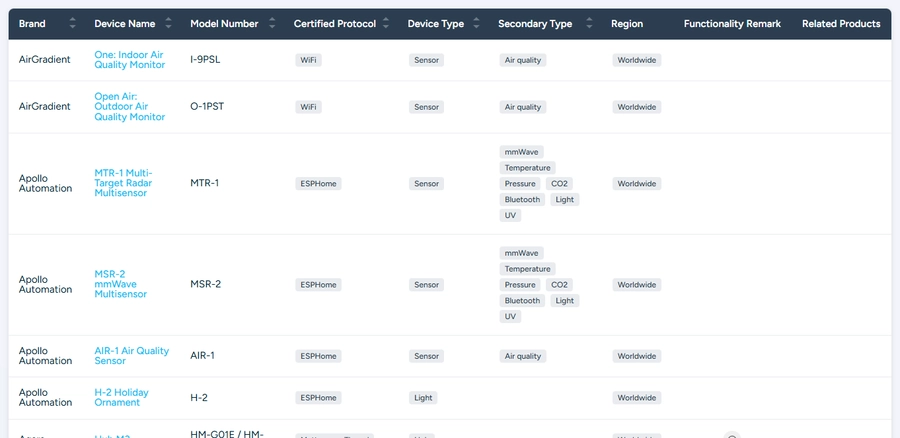 So many (useful) columns!
Every certified device earns the right to display our badge on its packaging, proudly announcing it Works with Home Assistant. If you’re not part of the program, you’re not allowed to use the Home Assistant logo. We used to have different versions of the badges depending on whether the device used Matter, Zigbee, or Z-Wave, and so on, but – let’s be honest – they were overcomplicated and impossible to actually read on a box!
Since the badge is such an important signal when you’re browsing products, we decided to simplify it and focus purely on that mark of quality. Now we have just two versions: a color badge and a monochrome design that are easier to read on any packaging.
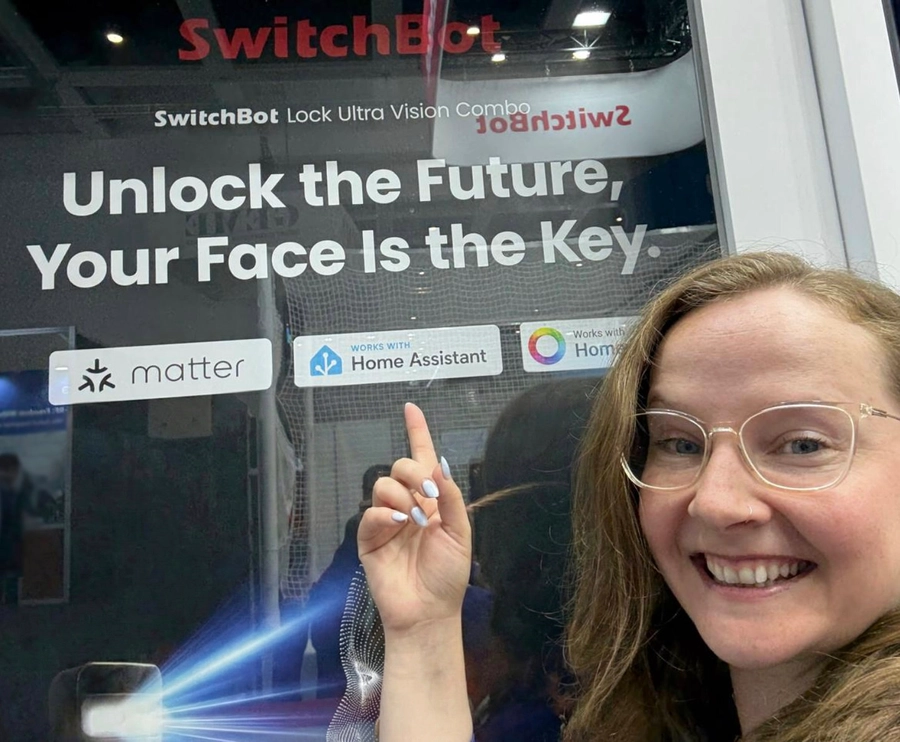 We love to see the new badge being used IRL!
For 2025, our goal was simple: we wanted both the big names and passionate community projects to be able to join. Yes, we’re thrilled to have major smart home players such as Shelly and Reolink committing to the program, but it’s equally important for us to connect with smaller, community-built projects – the start-ups or developers who keep open source at the heart of everything they do, like AirGradient and Apollo Automation.
This commitment to inclusivity is a big reason why we keep the annual fee for joining the program deliberately low, at only 500 CHF (per partner, not device) per year. We want to ensure being part of Works with Home Assistant is achievable for everyone who shares our vision.
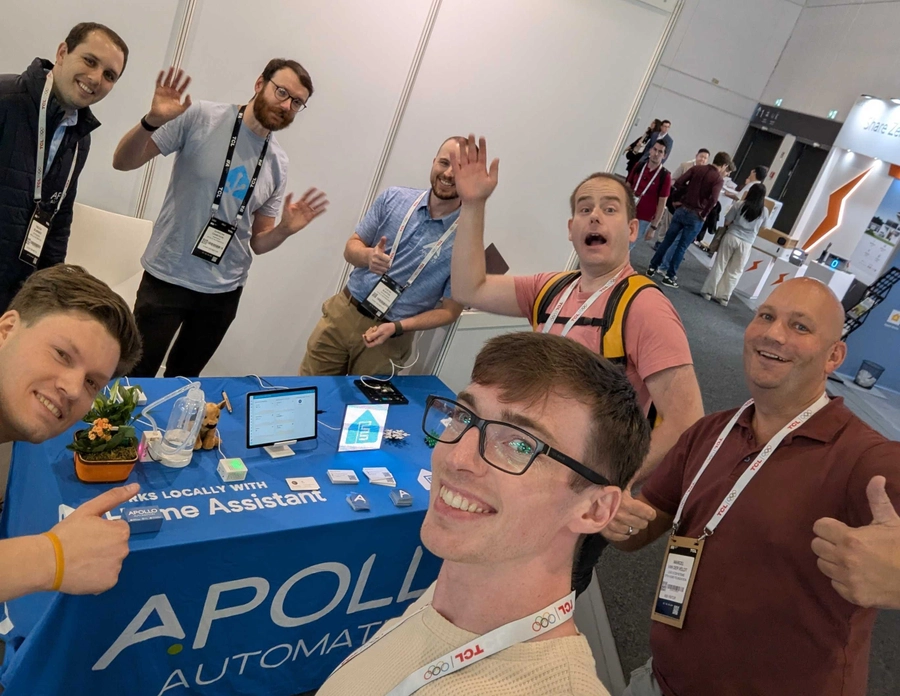 Some of our team visiting the Apollo booth at IFA Berlin in September.
Testing hasn’t always been perfect – we knew we needed to make improvements, and the community has been amazing in helping us find things we need to look at. Like everything we do, we learn as we go, we iterate, and we improve. Previously, everyone was testing in their own way, but now we’ve standardized the way we test and give feedback to partners. This means testing is more consistent, exacting, and able to handle higher volumes – one of the reasons why we’ve been able to increase the number of devices we’ve certified so radically!
A lot of devices that come across our desks don’t pass certification, and it’s often due to organizations not fully understanding the requirements of joining. While this can vary greatly depending on the device and protocol, it was clear we needed to be more transparent. So as well as publishing our Works with Home Assistant Working Group Resolution, we’re also publishing further testing information: this sample testing report for a simple smart plug shows you the process we follow.
Because we get to see and test new devices in advance, and receive feedback from our certified partners as part of the process, we have a sneak peek into what vendors have in mind for 2026 and beyond. This allows us to look at our product roadmap and see where we need to realign with innovations in the market. By testing today’s devices, we’re guiding tomorrow’s Home Assistant features!
 Spot one of the certified cameras in our State of the Open Home segment
A core aim of the program is to ensure all certified devices have their “key functionality” available within Home Assistant. So how do we decide what aspects are controllable in Home Assistant and what doesn’t make the cut?
We use our best judgment on this, but we also want your feedback, because everyone has a slightly different point of view, even within our team and testers – so look out for our user research requests, or please share your thoughts in our comments below!
For all this talk of testing, Works with Home Assistant is primarily about people and partnerships! As a foundation, we’re focused on making sure the program stays deeply connected with the community it serves, both online and in person.
We’ve been stepping up our presence at meetups and events around the world, so we can share the latest developments and gather your valuable feedback. From gigantic trade shows like CES in Las Vegas to small, local get-togethers, you can expect to see us there! We also want to do this online, so you can ask partners questions on streams, or in comments – keep an eye out for more of this in future.
 San Diego Meetup
So that was 2025 in a (big) nutshell. As for 2026, we want to kick it off with some wonderful Zigbee partners we’ve been working really hard on – particularly after the awesome launch of Connect ZBT-2. Even though Zigbee is one of the longest-established protocols, it’s actually one of the hardest for us to test and certify because so many devices operate outside the official specification. This means our team and partners do a lot of prep to get them to a testable state – but in doing so we’re driving big improvements in functionality for everyone!
We also want to improve coverage globally, so, regardless of region, everyone who uses Home Assistant has a good range of certified options to choose from. This means we’re actively seeking partners who will cover regions outside of Europe and North America for everyday essentials like smart plugs and lighting.
As ever, everything coming up will be covered right here – so stay tuned for updates… and here’s to certifying many more devices in 2026! 🎉🥳🎊

Windows 10 users can now automatically protect their passwords, bookmarks, and more by turning on backup in Firefox. Your browsing data is saved daily on your device and can be encrypted with a password. When you set up a fresh install of Firefox on any operating system for a new device or your current one, you can restore from this backup and pick up right where you left off. This feature is currently available on Windows devices and will be coming to other operating systems soon.
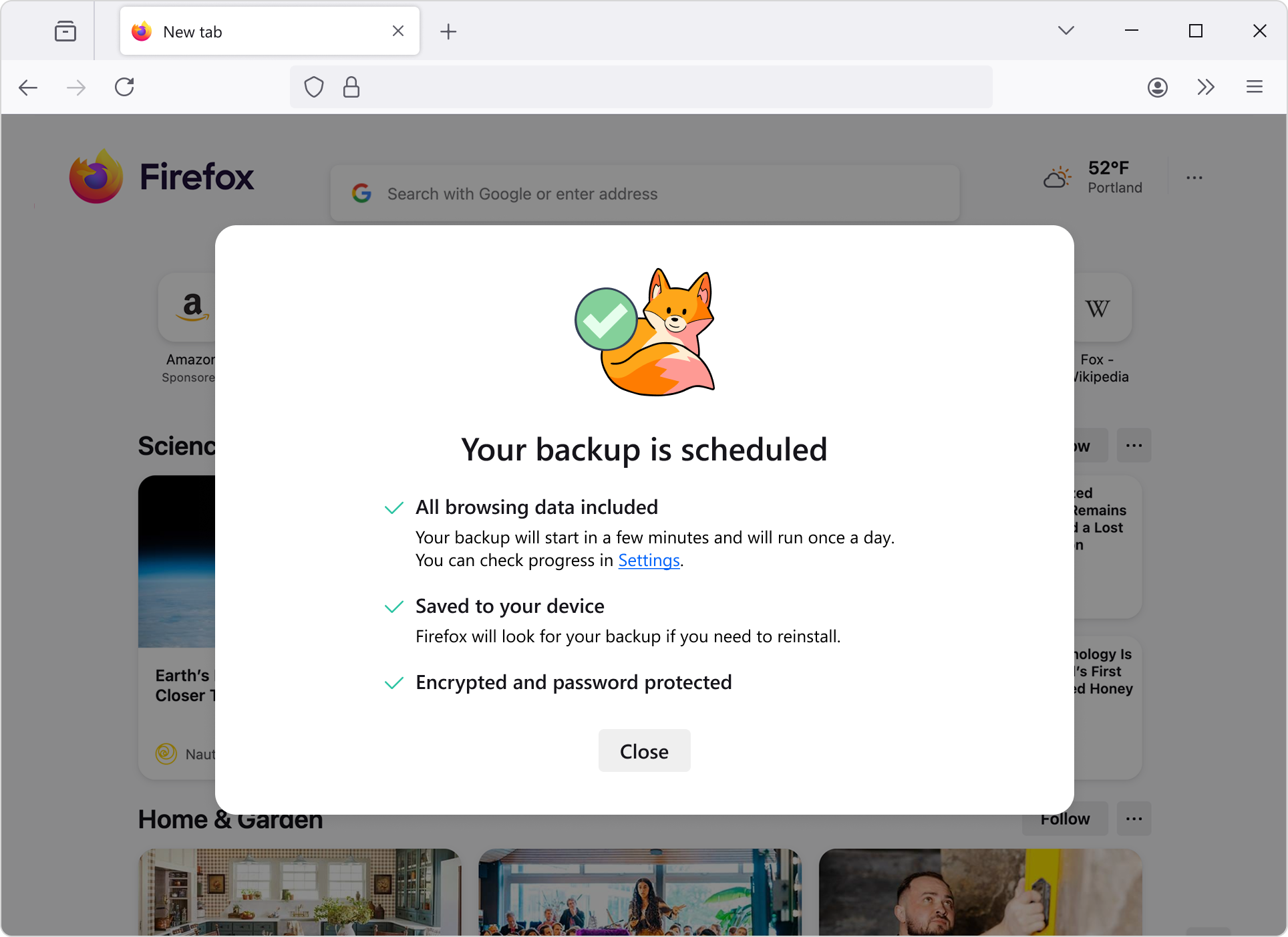

This feature is part of a progressive roll out.
Certain new Firefox features are released gradually. This means some users will see the feature before everyone does. This approach helps to get early feedback to catch bugs and improve behavior quickly, meaning more Firefox users overall have a better experience.
MacOS users now have a dedicated GPU process by default. This includes WebGPU, WebGL, and Firefox's own WebRender. With this feature enabled, fatal errors in graphics code will no longer crash the browser, and will instead transparently restart the GPU process.
Firefox Labs is now available to all desktop users, regardless of whether they choose to participate in studies or submit telemetry. This means more experimental features are now available to more people.
Users can now skip the results page and see direct results as they type in the search bar for faster, simpler browsing.
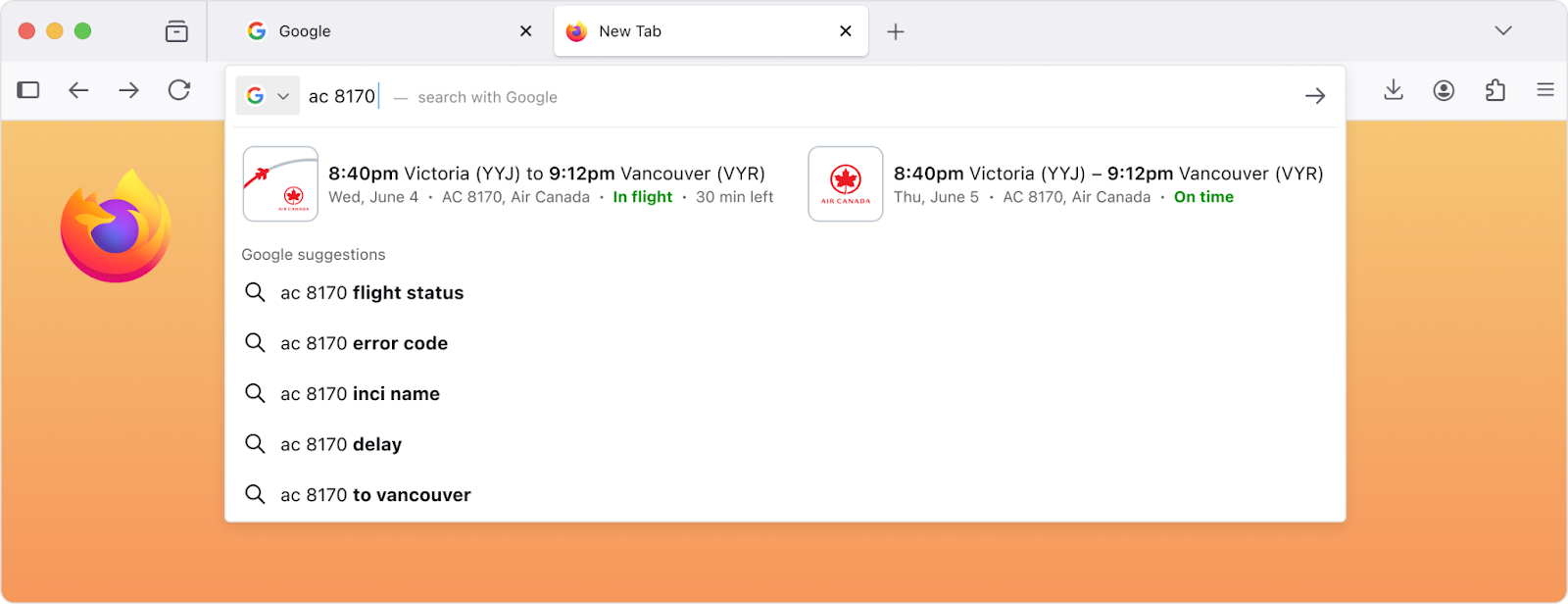
This feature is part of a progressive roll out.
Certain new Firefox features are released gradually. This means some users will see the feature before everyone does. This approach helps to get early feedback to catch bugs and improve behavior quickly, meaning more Firefox users overall have a better experience.
There is a New Tab Weather opt-in workflow available for users in the EU and some other countries, where they can choose whether to enable location detection or manually search for a location.
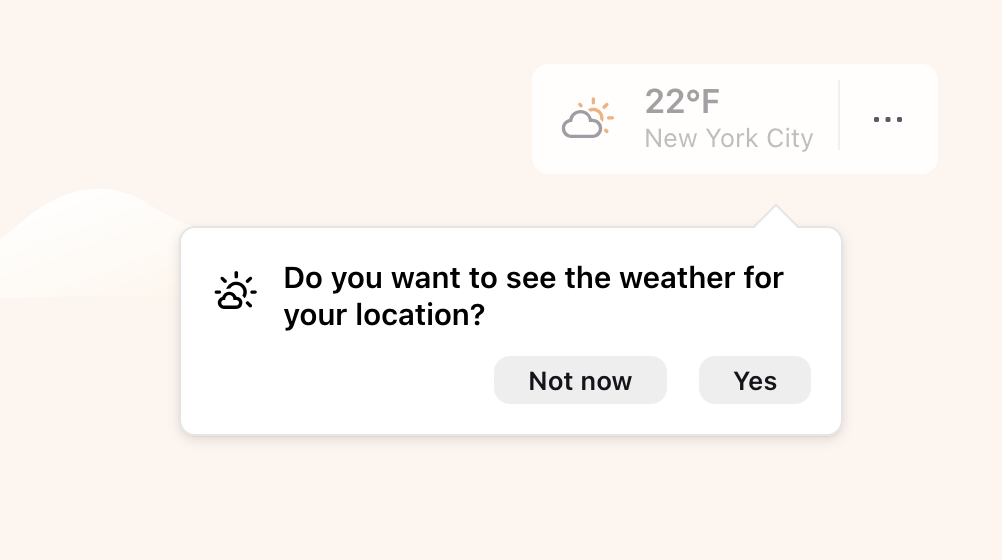
This feature is part of a progressive roll out.
Certain new Firefox features are released gradually. This means some users will see the feature before everyone does. This approach helps to get early feedback to catch bugs and improve behavior quickly, meaning more Firefox users overall have a better experience.
Firefox now natively supports fractional scaled displays on Linux (Wayland), making rendering more effective.
For users of the English-language versions of Firefox in France, Germany, and Italy, the address bar now shows English-language suggestions for holidays and other important dates.

When the timepicker is enabled for <input type="time"> and <input type="datetime-local">, it now provides full keyboard and assistive technology support. This update also improves the behavior of the time spin buttons for users who prefer reduced motion. The Firefox Accessibility team hopes that making the built-in timepicker accessible will encourage wider adoption of browser-provided time and date inputs across the web, reducing the need for custom controls, and improving accessibility for all users.
Various security fixes.

The Colors dialog in Settings now uses clearer color picker controls that keep each color sample next to its label. It makes it easier to understand and adjust text, background, and link colors when using a forced colors palette to customize the default text, link, and page background colors, especially with or without screen magnifiers.
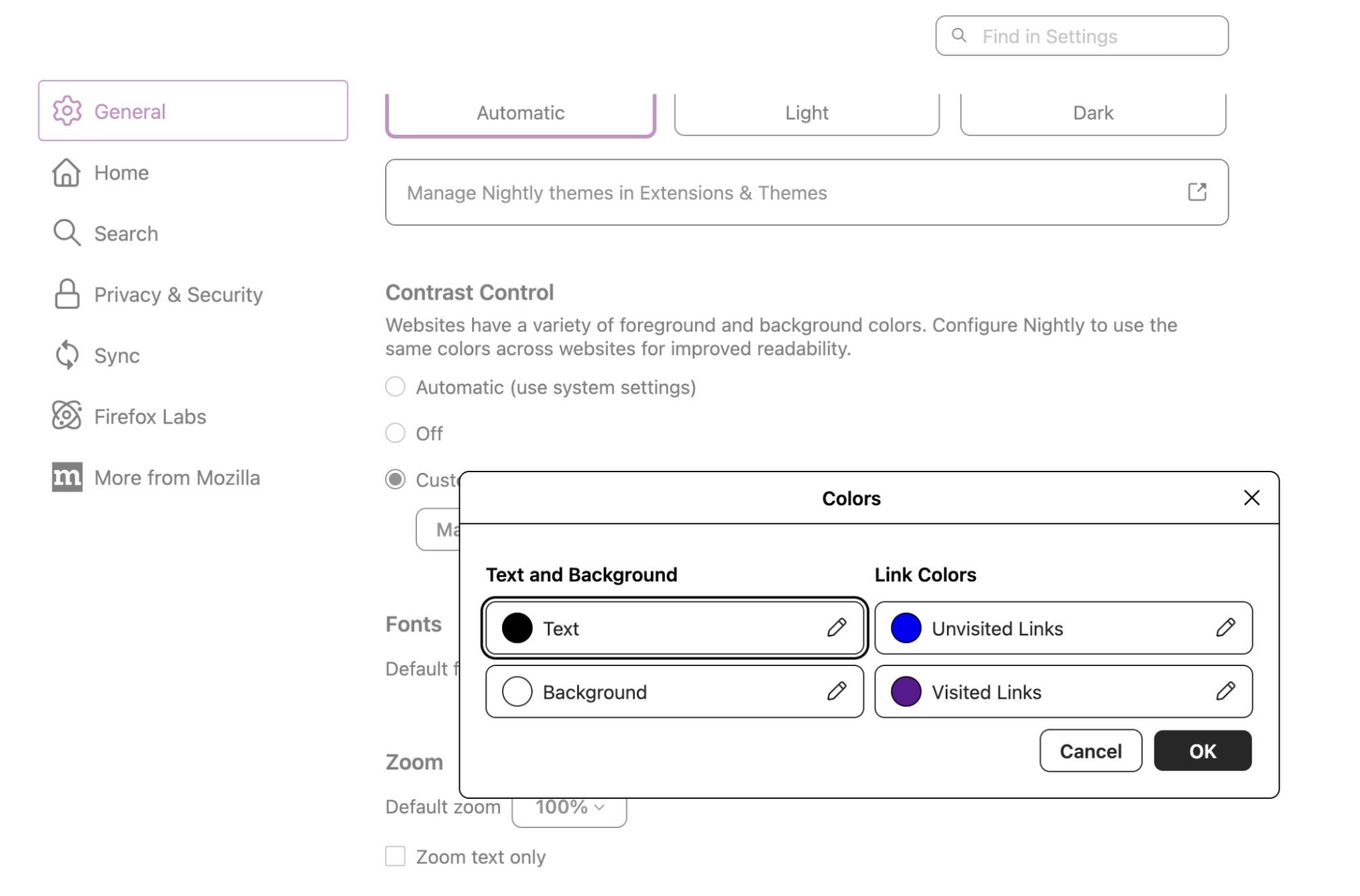
Firefox removed support for Direct2D on Windows. If you still require Direct2D support, please use ESR 140.0 or higher.

You can find information about policy updates and enterprise specific bug fixes in the Firefox for Enterprise 146 Release Notes.

Firefox now supports ML-KEM for WebRTC, by sending a post-quantum (PQ) key share during the DTLS 1.3 handshake. ML-KEM is the next-generation public-key cryptosystem that is believed to be secure against attackers with large quantum computers.
Firefox now supports compressed elliptic curve points in WebCrypto. These reduce the size of public keys by nearly half, saving bandwidth and storage, while still allowing the full point to be reconstructed mathematically.
The Skia graphics library has been updated to improve rendering performance and compatibility.
Unused CSS custom properties are now hidden by default in the Rule view of the Inspector. This not only reduces clutter, but in some cases also speeds up the rendering of the inspector panel.

The @scope rule is now supported, allowing authors to restrict styling to a subtree of the DOM. This avoids having to write overly-specific selectors.
Firefox now supports the contrast-color() CSS function that takes a color value and returns a contrasting color. Note that the specification currently restricts the contrasting color to black or white. This limitation is expected to be removed in the future. (Learn more)
Introduced the text-decoration-inset property, which allows authors to adjust the start and end points of line decorations.
Firefox now supports the legacy -webkit-fill-available keyword as a value for the CSS width and height properties. This improves rendering of content on websites that use this value. This keyword is an alias for the recently standardized stretch keyword, which is not yet enabled in Firefox.

On Windows, clicking tabs may not work at the very top of the screen when Firefox is maximized on a second monitor. We’re working to fix this in a future release. (Fixed in 147.0)

With the release of Firefox 146, we are pleased to welcome the developers who contributed their first code change to Firefox in this release, 16 of whom were brand new volunteers! Please join us in thanking each of these diligent and enthusiastic individuals, and take a look at their contributions:

(Total 1300+)Wana boot and install OS through network (PXE)? Welcome to my new project iVentoy.
About iVentoy https://www.iventoy.com/
iVentoy is an enhanced version of the PXE server.
Extremely easy to use
Many advanced features
x86 Legacy BIOS, IA32 UEFI, x86_64 UEFI and ARM64 UEFI mode supported
110+ common types of OS supported (Windows/WinPE/Linux/VMware)
......
SHA-256
57689c6ef027eb5994c2aad8a2325c38455249451de3b29107274a30e15e7633  ventoy-1.1.08-linux.tar.gz
ad312c5a2f0fe65d92ee3e31b428a944ab6a93101f66a005ae494ea6e8c349d4  ventoy-1.1.08-livecd.iso
2eeb7553e62a940449a42b59ede3b4d3550023b2ff864a297dee818086e3564b  ventoy-1.1.08-windows.zip

Warning
After upgrade, you need to run php bin/console doctrine:migrations:migrate (or equivalent) as webserver user after upgrade.. If you are running a docker container, use sudo docker exec --user=www-data partdb php bin/console doctrine:migrations:migrate, or sudo -E inside the docker container, to ensure that the migrations are applied to the correct database.
Tip
If you like Part-DB, consider donating to support the development. Press the sponsor button on the main github page, for more info.
Important
If you are using Part-DB it would be helpful if you fill out this short survey on your usage of Part-DB (Google Forms): https://forms.gle/Q15twx3YYq3qCNfe8
COMPOSER_EXTRA_PACKAGES env to docker containers, to install additional composer packages, like email bridges (#1138)Full Changelog: v2.2.1...v2.3.0


Changes in 8.2.1:

Changes in 8.2.0:
OBS-Studio-32.0.3-Sources.tar.gz: 583c8b47d3accb4a48b9966ac7e2f1c96501a7fb3d57dd4454cdaa4df4c01e7f
OBS-Studio-32.0.3-Ubuntu-24.04-x86_64-dbsym.ddeb: 48db8b9d4a74bdafc70b2d71501d44965dc4a180ada920e787f91b8ca67825e4
OBS-Studio-32.0.3-Ubuntu-24.04-x86_64.deb: 3d5737a3e88762931f17068288bab8749b0de9ad39e71418eb97391b5477fb64
OBS-Studio-32.0.3-Windows-arm64-PDBs.zip: 6bb45a0b75896b080ee4c5b1e742727eca6e78b32c2e384ab538397e27cd8fa7
OBS-Studio-32.0.3-Windows-arm64.zip: e3ed1f2145798a11f37d5d1898adfd8b21483e0969485845106e763b0e93d7b7
OBS-Studio-32.0.3-Windows-x64-Installer.exe: 8c69a00e23cfeaa441725160586ca0a51c27e557652ed65000df67179dad9ac3
OBS-Studio-32.0.3-Windows-x64-PDBs.zip: e8dd1daea83d7d859facbb8fb1fc097e8a6bf6283b75a8198370935aa5362ad9
OBS-Studio-32.0.3-Windows-x64.zip: 7dbaafe4ff9acbeab688035d6a8071e39c09d1a86f3aa3e300e74eec09e4b502
OBS-Studio-32.0.3-macOS-Apple-dSYMs.tar.xz: 9684eb894cfa3e34dfb41690309fe5bc1438568e36fae64cdbd40b345ab75660
OBS-Studio-32.0.3-macOS-Apple.dmg: 5efd7ec3871fa5f217644425e6777354716425dd25c0759c9373b163cc9de6e8
OBS-Studio-32.0.3-macOS-Intel-dSYMs.tar.xz: 8ce6315d900586500f1b9237d632ab2f6cb5400dbfd44f4be649889abd7d70b0
OBS-Studio-32.0.3-macOS-Intel.dmg: 5a74b72ef4b00c655cdb50215bb9455d529542f1d32d119b1747feee2ec77166

Updates:
Changes/improvements:
Fixes:

New
Bug Fixes
Enhancements:
Security

VIENNA, Austria – December 04, 2025 –Enterprise software developer Proxmox Server Solutions GmbH (henceforth “Proxmox”) today announced the immediate availability of the stable version 1.0 of Proxmox Datacenter Manager. This new product directly addresses the increasing complexity of operating distributed and large-scaled Proxmox-based environments. Proxmox Datacenter Manager offers a holistic single pane of glass view for the administration, monitoring, and scaling of Proxmox VE and Proxmox Backup Server, with the primary goal of providing administrators with comprehensive and seamless control.
Managing growing data centers, distributed across multiple locations or clusters, consistently presents major challenges for enterprises and teams. A lack of global oversight, fragmented metrics, and the need to perform complex operations manually across various environments can quickly lead to inefficiencies and increased error susceptibility.
Proxmox Datacenter Manager was developed as the strategic answer to this scaling challenge. It bridges the gap between individual Proxmox-based nodes and clusters, providing a unified view of the entire infrastructure. This not only simplifies routine tasks but also enables advanced functionalities that were previously difficult to achieve.
Proxmox Datacenter Manager delivers a set of core functions specifically designed for managing complex, enterprise-grade environments:
"The modern infrastructure landscape demands adaptability, from data centers to edge locations. Organizations need tools that evolve alongside their business. Proxmox Datacenter Manager is designed as a key building block within our expanding ecosystem, empowering customers with the right solution for every stage of their journey", says Tim Marx, COO at Proxmox. "By choosing the Proxmox ecosystem, organizations unlock a wide range of deployment options. From high-performance setups at hyperscalers to distributed branch offices that maintain data sovereignty. Our consistent commitment to openness ensures long-term interoperability and real freedom of choice for customers and partners."
Proxmox Datacenter Manager 1.0 is immediately available for download. Users can obtain a complete installation image via ISO download, which contains the full feature-set of the solution and can be installed quickly on bare-metal systems using an intuitive installation wizard.
Seamless distribution upgrades from older versions of Proxmox Datacenter Manager are possible using the standard APT package management system. Furthermore, it is also possible to install Proxmox Datacenter Manager on top of an existing Debian installation. As Free/Libre and Open Source Software (FLOSS), the entire solution is published under the GNU AGPLv3.
For enterprise users, Proxmox Server Solutions GmbH offers professional support through subscription plans. A subscription provides access to the stable Enterprise Repository with timely updates via the web interface, as well as to certified technical support and is recommended for production use. Customers with active Enterprise Support for their Proxmox remotes also gain access to Proxmox Datacenter Manager updates and support.
Resources:
###
About Proxmox Server Solutions
Proxmox provides powerful and user-friendly open-source server software. Enterprises of all sizes and industries use the Proxmox solutions to deploy efficient and simplified IT infrastructures, minimize total cost of ownership, and avoid vendor lock-in. Proxmox also offers commercial support, training services, and an extensive partner ecosystem to ensure business continuity for its customers. Proxmox Server Solutions GmbH was established in 2005 and is headquartered in Vienna, Austria.
Contact: Daniela Häsler, Proxmox Server Solutions GmbH, marketing@proxmox.com
